
SYDNEY SPEECH THERAPY
Receptive Language
Receptive language is how we understand language. It includes spoken words, written text, gestures, and signs. Receptive language is one of the most important building blocks of how your child learns, connects, and grows.
Vocabulary & Concepts
Understanding words and concepts such as time, location and size
Question Types
Understanding wh-
questions (e.g., who, what, where) and making inferences & predictions
Following Directions
Understanding and recalling directions, which are used in conversation at home and school
Grammar & Sentences
Understanding
grammatical structures
(e.g., past tense, plurals, pronouns) and sentences
Vocabulary & Concepts
Understanding words, phrases, and concepts such as time, location and size (e.g., before, next to, behind, smaller)
Grammar & Sentences
Understanding grammatical structures (e.g., past tense, plurals, pronouns) and sentences
Following Directions
Understanding and recalling single and multi-step directions. These are used in conversation at home and school
Question Types
Understanding wh questions (e.g., who, what, where), inferencing questions, predicting questions & abstract language
Vocabulary & Concepts
Understanding words, phrases, and
concepts such as time, location and size (e.g., before, next to, behind, smaller)
Question Types
Understanding wh questions (e.g., who, what, where), inferencing questions, predicting questions & abstract language
Grammar & Sentences
Understanding grammatical structures (e.g., past tense, plurals, pronouns) and sentences
Following Directions
Understanding and recalling single and multi-step directions. These are used in conversation at home and school
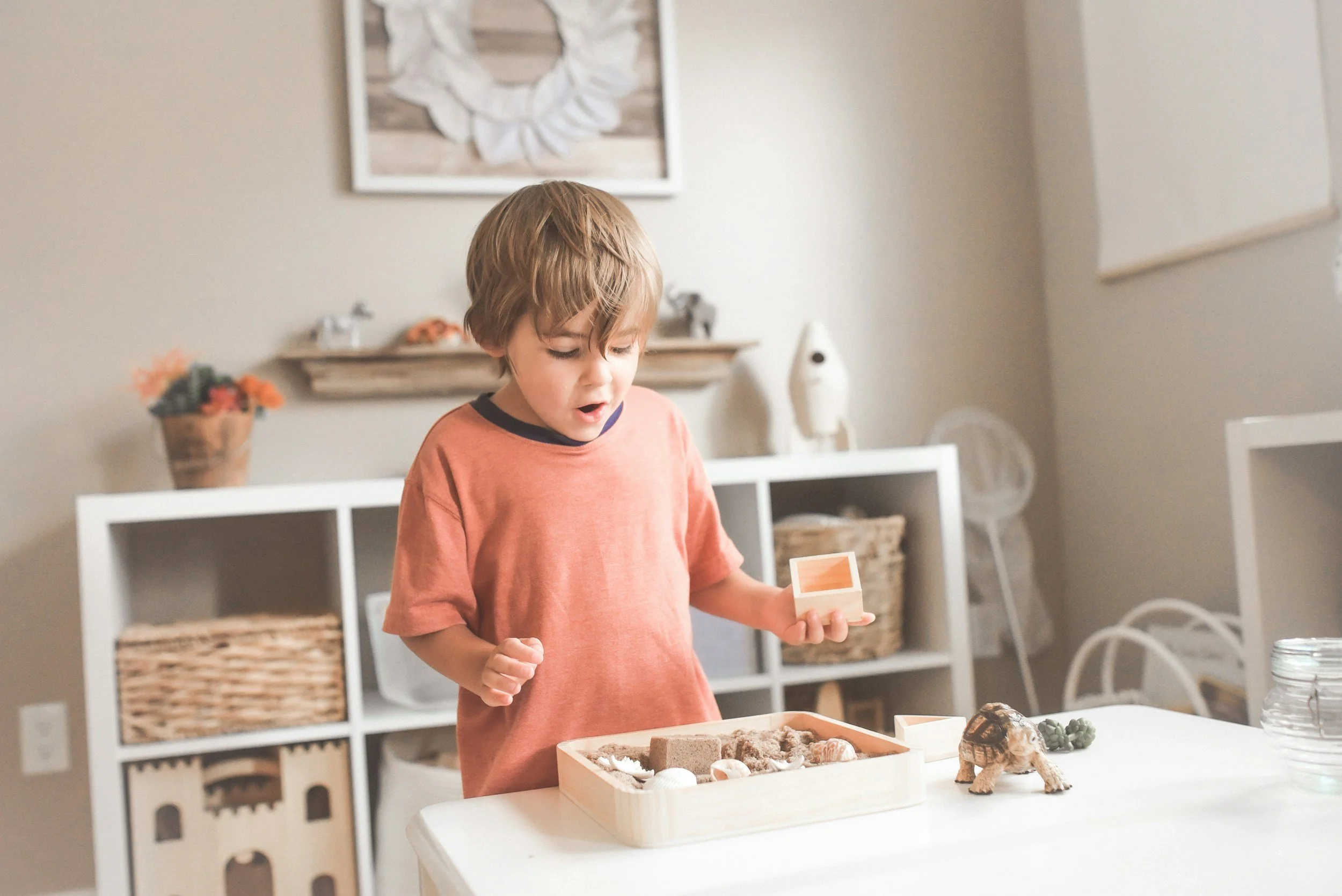
Signs to look out for:
Does your child have difficulty following directions?
Can they answer simple wh-questions, like ‘who’, ‘what’ and ‘where’?
Do they give unusual or unrelated answers to questions?
Do they have difficulty listening and following along in group settings?
Can they point to objects when you name them?
-
Children can typically:
Consistently respond to their name
Recognise greetings (e.g., hello) and gestures (e.g., waving)
Understand at least 10 words
Look at familiar people or objects when named
Follow simple home routines
-
Children can typically:
Understand at least 50 words
Follow simple non-routine instructions (e.g., Get the cup)
Understand early prepositions (e.g., in, on)
-
Children can typically:
Recall at least 2 items (e.g., Get me the block and ball)
Follow simple 2-step instructions (e.g., Look on the table and get the car)
Respond to ‘what’ and ’where’ questions using verbal and non-verbal communication
-
Children can typically:
Recall 3 items (e.g., Get me the banana, apple and pear)
Follow complex 2-step directions (e.g., Get me the blue ball and throw it to dad)
Understand the concept of same/different and size (e.g., small/big)
Sort items into their groups (e.g., foods vs toys)
Recognise some colours
-
Children can typically
Follow simple stories
Answer most questions about daily activities
Understand most wh-questions about things that are in front of them
Understand some number concepts (e.g., one, more)
-
Children can typically:
Follow simple 3-step directions (e.g., First find the car, next put it in the garage, and last close the garage door)
Understand some time concepts (e.g., now/later, yesterday/tomorrow)
Recognise some letters, sounds and numbers
Begin to understand ‘how’ and ‘why’ questions
Receptive Language Milestones in the Early Years
Speech Pathology Australia (SPA). (2018). Communication Milestones. Retrieved from:
https://www.speechpathologyaustralia.org.au/SPAweb/Document_Management/Public/Communication_Milestones.aspx
Not sure where to start?
If you have concerns about your child’s understanding of language, we’re here to help!